Washing Hands Routine for Kids: A Parent Playbook
A washing hands routine is pictures of wet, soap, scrub, rinse, and dry — not a shout at the sink. How to build one, the 20-second timer, when digital wins.
If your four-year-old treats “go wash your hands” as optional weather at the table, the sentence is not broken. The child cannot see the next action from the sink.
A washing hands routine is five pictures of what happens at the bathroom counter: wet the hands, soap, scrub, rinse, dry. That is the whole product. Parents reach for it after the hundredth hallway reminder — and then print a thirty-day star grid that only the adult can decode.
This guide covers what a washing hands routine actually is, how it differs from a brushing teeth routine or a potty training chart, how long to scrub, how to build a picture sequence that gets used at the sink, the sensory fights that look like defiance, and when to stop laminating and put the same pictures inside a visual routine.
This is parenting information, not medical advice. A fever, a wound that will not stay clean, a rash that spreads, or a child who cannot get soap off because of a skin condition — those are clinician questions. A chart cannot fix an infection.
What Is a Washing Hands Routine for Kids?
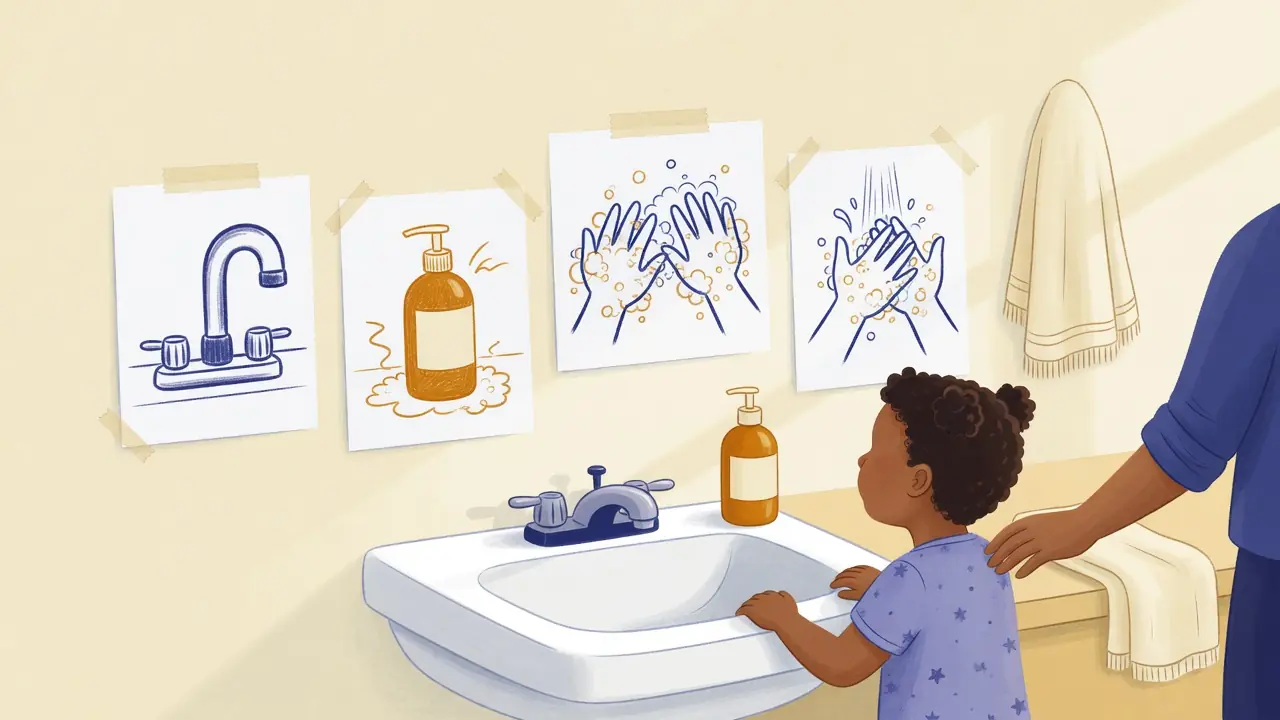
A washing hands routine is a short picture sequence that lives at the sink. Each picture is one action the child can start with their own hands. A parent stands nearby. The child looks, does that one thing, and sees the next picture.
Wet. Soap. Scrub. Rinse. Dry.
That is not a morning routine checklist. Wake, dress, breakfast, and shoes are the morning’s skeleton. The sink sequence is one bone you drop into that skeleton so “wash your hands” is not a surprise lecture at the table.
It is also not a potty training chart. Sit, wipe, flush, wash is the toilet. The last card there is one wash, usually a short rinse with soap you already loaded. Wet, soap, scrub, rinse, dry is the counter. Same room, different job. Mixing them on one board trains the child to treat the bathroom as one giant optional chore.
It is also not a brushing teeth routine. Wet the brush, paste, brush, spit, rinse the brush is a two-minute mouth job. Wet the hands, soap, scrub, rinse, dry is a twenty-second hand job. Same faucet. Different pictures. Do not hang a molar next to a towel and call it hygiene.
What a washing hands routine is not
It is not a sticker grid. If the page is thirty empty boxes and a cartoon faucet, you printed a reward chart and hung it above the towels. The child cannot see what to do. They can see that they have not earned Saturday.
It is not a behavior chart. Hitting a sibling is a different problem. A skipped wash is not a personality score.
It is not a social story. A story is a first-person close-up of one hard moment — foam on the wrists, cold water, the first time at a school sink. A routine is the sequence you run before meals and after the toilet. Many families need both: the story rehearses foam, then the five pictures run the ordinary session.
It is not a chore. Folding a washcloth is household help. Washing is a body skill and a health habit. Putting “wash hands” on the same chore list by age as “put shoes away” invites the child to refuse it like laundry.
It is not a diagnosis and it is not a deadline. Typical kids, autistic kids, and ADHD kids all use the same five pictures. The pictures do not decide who the child is.
Why “Go Wash Your Hands” Fails at the Sink
Adults treat a reminder as information. Children treat a reminder as weather unless it is a picture they can act on from where they are standing.
They cannot see the job. “Wash your hands” is a room-sized cloud. A four-year-old can wet their palms. They can put soap on skin you already pointed at. They cannot “do a thorough twenty-second clean of all surfaces including nails.” If your chart says wash hands, you asked for an identity, not an action.
The chart is in the wrong room. A fridge chart is useful when the job is in the kitchen. It is invisible from the sink. The pictures have to live at the counter, or travel with the child.
Twenty seconds is abstract. Adults hear “twenty seconds” and feel a clock. Children hear a parent who will say “keep going” until the parent is bored. A visual timer on the scrub card is a picture of how long this lasts. A hallway voice is not. A song works until the child learns to skip verses.
Working memory is two items, maybe three. “Wet them, get the soap, not too much, fronts, backs, between fingers, rinse, don’t splash, dry, turn the tap with the towel” is a paragraph. A five-year-old holds the walk to the bathroom. A picture strip holds the rest of the sentence on the wall.
The prize is too far away. A star for Saturday’s ice cream is a month in kid time. They will bargain, then melt down, then ignore the grid. A useful mark, if you use one at all, happens on the dry picture this session.
You narrate instead of pointing. “Did you wash?” is a quiz. Pointing at the next picture is information. Kids resist quizzes. They will often follow a picture, especially if the same picture has meant the same action for a week.
Foam feels like an emergency. Thick soap, a burn from hot water, and a towel that scratches are sensory events. The child is not being difficult. They are trying to get a bad feeling off their skin. A sticker cannot fix that. A milder soap and a story about foam can.
A useful rule: if you have to read the chart out loud every session, it is not a washing routine.
Readiness and Age — Not a Birthday Party
A chart cannot manufacture motor skill that is not there yet. Use pictures at the age the hands can start the motion. Keep a parent finish-pass until the hands can finish it.
Babies to age 2. You wash. The child can hold their hands under a stream you already started. One or two pictures are enough: wet, dry. Skip a long session before a meal if the exit is already tight. Put the real practice after a calm diaper change.
Ages 2–3. The child can wet and dry, messily. You still load the soap and finish the backs of the hands. Five pictures can live at the sink even if you are doing three of the steps. The pictures teach the order. They do not prove independence.
Ages 3–5. This is the age most parents search. The child can run wet → soap (with a pump you already set out) → scrub while a disk runs → rinse → dry. You stay in the room and do a five-second finish-pass between the fingers. Preschool schedules should drop this sequence before snack, not invent a third hygiene poster.
Ages 6–8. Fine motor is catching up. Many kids can run the twenty-second disk with you watching from the door. Keep the same five pictures. Add a “between fingers” picture only if the backs are consistently skipped. Do not add a twelve-step germ lecture.
Ages 9–12. The pictures can fade. The disk usually should not. Tweens forget duration, not the idea of soap. A disk on the counter beats a parent speech about germs.
Public-health guidance commonly uses soap and water, about twenty seconds of rubbing, then rinse and dry. A paper towel that turns the tap off is a nice extra for older kids, not a sixth required picture for a toddler. Ask your pediatrician what they want for this child. A chart follows that advice. It does not replace it.
The Five Pictures (and the Twenty-Second Disk)
Build the sequence once. Use it before meals, after the toilet, after coming inside.
1. Wet the hands
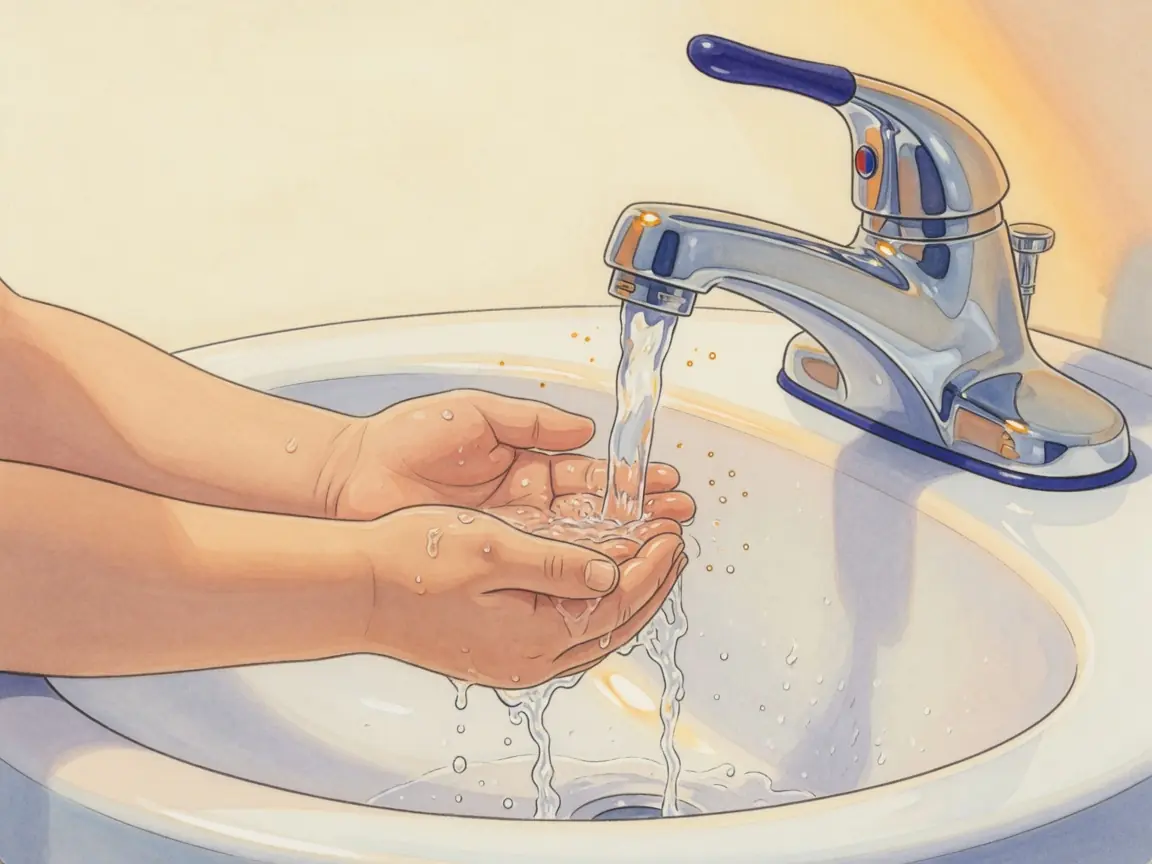
Picture: palms under a tap. The child can start this without help. It is a clean first win. If the child will not walk to the sink, put a first-then board before this card — first sink, then a song — instead of arguing in the hallway.
2. Soap
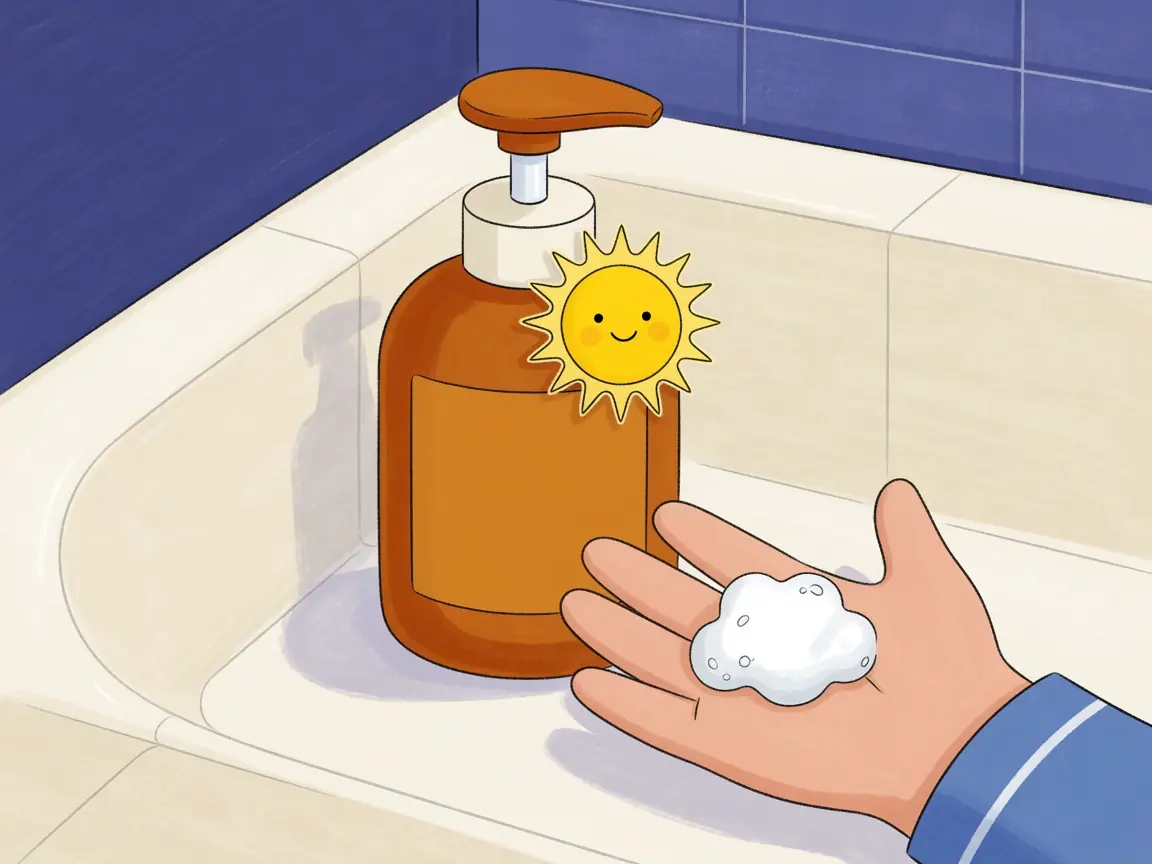
Picture: a pump, or a bar you already unwrapped, plus soap on a palm. You still control the amount until they stop emptying the bottle. One pump. The picture says “soap goes here,” not “you are in charge of the pump.”
3. Scrub — this is where the timer lives
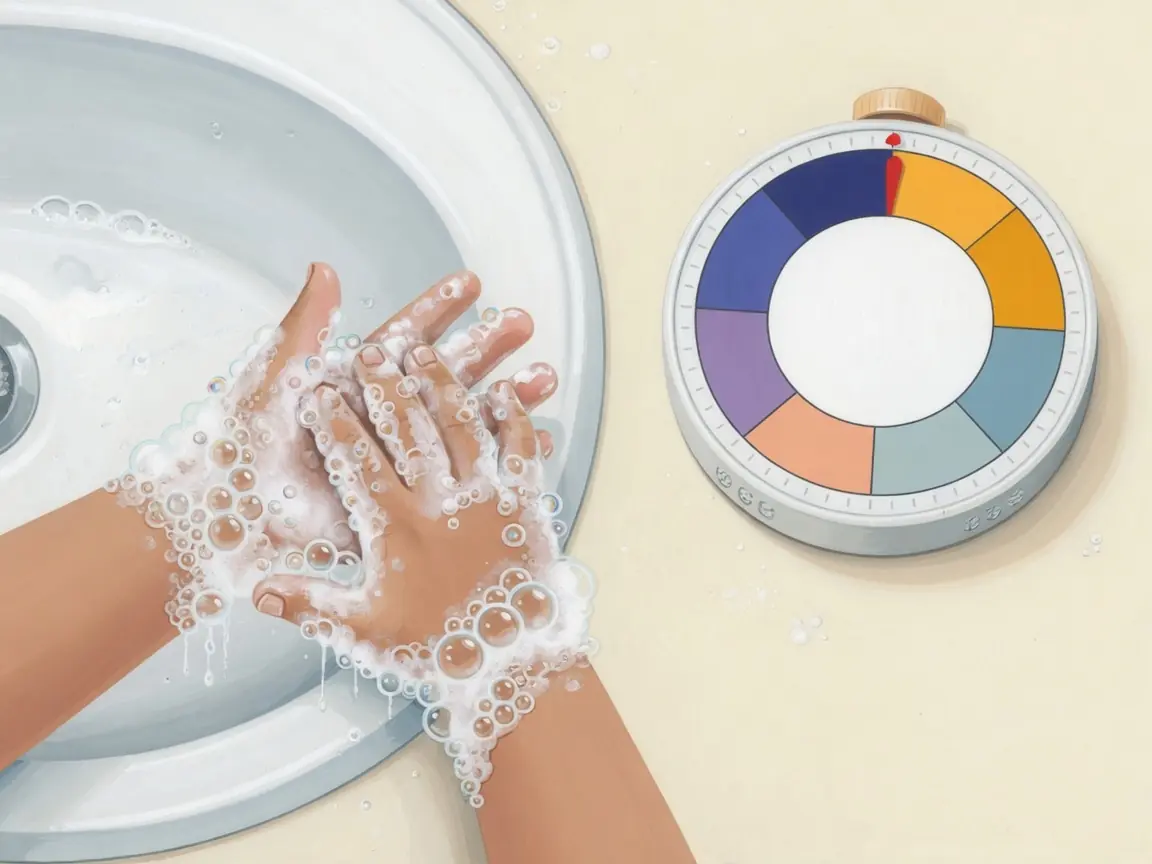
Picture: two soapy hands plus a disk. Start a twenty-second visual timer when this card is current. Fronts, backs, between fingers. A song is a backup, not the clock. If they sing two verses and skip the backs, the disk is still honest.
Parent finish-pass happens on this card, not after the child has left. Five seconds between the fingers. Then the disk can hit zero.
4. Rinse
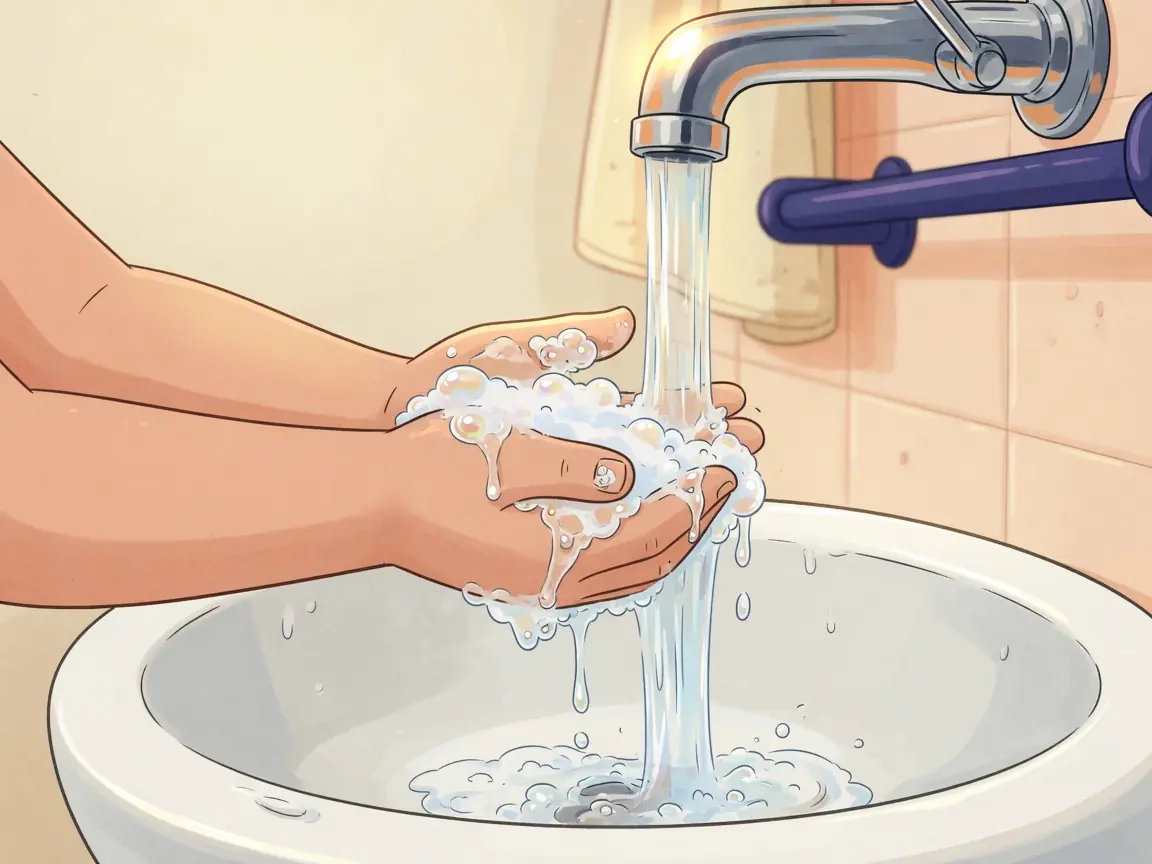
Picture: hands under the stream, foam leaving. Keep the tap on until the bubbles are gone. Cold-water fights belong here — warmer, not a lecture about germs. If they rinse for one second and run, point back at this picture.
5. Dry
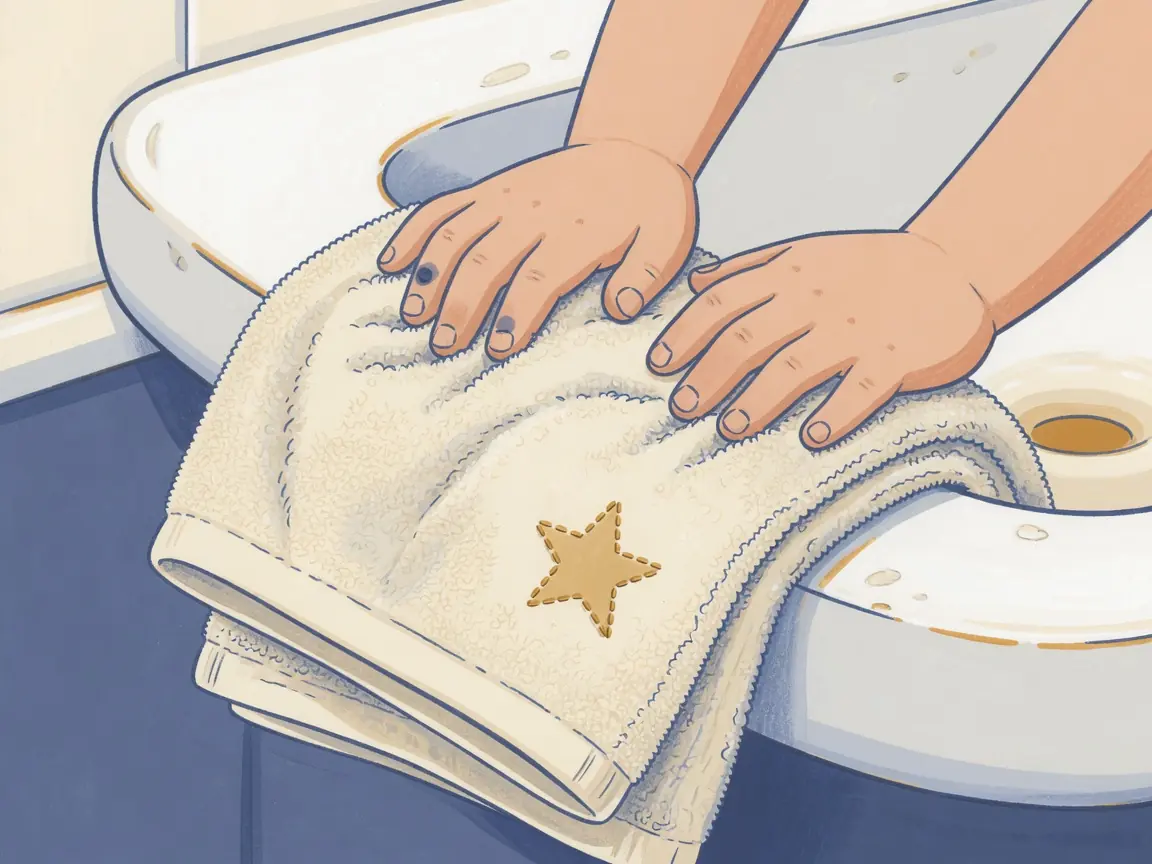
Picture: the towel that already lives on this hook. Same towel every day. A scratchy guest towel is a sensory problem. Damp hands that wipe on a shirt are this card, skipped. The picture says “this cloth,” not “become tidy.”
Five pictures. One disk on the stall. That is a washing hands routine.
If you want a sixth card, make it “turn the tap with the towel” after the five already run without a speech. Do not start with a twelve-step hospital protocol.
Meals, Toilet, and the Door — Same Five Pictures
Parents keep asking whether washing belongs in the morning checklist, after potty, or as its own chart. It belongs as five pictures at the sink, reused at every window, not one checkbox.
Before eating. This is the window that actually saves illness days. The pictures then mean “do these five,” which is a job a four-year-old can start. If breakfast is already eight steps, keep the wash pass to these five so the table does not blow up.
After the toilet. The potty training chart ends with one wash. That last card should point at this sequence, not invent a shorter “splash and run.” Toddlers can use a two-picture wash on the toilet board and graduate to these five when the hands can scrub.
After coming inside. Recess, the yard, the car. Same pictures. After school routines should land on the sink before the snack, not hide it as “get cleaned up.”
Morning and bedtime. Morning checklists and bedtime charts already have a bathroom slot. Point at these five pictures. Do not add a sixth hygiene poster. Kindergarten mornings and school mornings stall on the sink when the pictures live in the kitchen.
Two houses, two sinks. Printables fail here first. A second bathroom does not have your laminated strip. A digital sequence on a tablet that already runs morning and bedtime travels. That is the honest reason to stop reprinting — not a productivity slogan.
Fights That Look Like Defiance
A lot of “they refuse to wash” is a sink saying no.
The water is wrong. Too hot, too cold, too loud. Fix the temperature. Then point.
The soap burns or smells like a waiting room. Switch. Keep the five pictures. Change one variable at a time.
The towel scratches. A softer cloth is cheaper than a week of tears.
ADHD and time blindness. The child is not ignoring you. Scrubbing has no edges. The disk is the accommodation. Shorter cards help more than a louder voice. See the ADHD routine page for the same timer logic on other steps.
Autism and sameness. Change the soap bottle and you may have changed the whole job. Keep the five pictures stable. A visual schedule around the sink is the same idea as this routine — pictures, not speeches.
School sinks. Automatic taps, loud dryers, a line of kids. That is a social story for the first week, then back to the five pictures at home. Do not rebuild the home sequence to match a dryer.
A second house with a different pump. Label the pump with the same soap picture, or run the digital sequence so the order survives the furniture.
Treat those as setup problems. Then the pictures can do their job.
How to Build the Chart This Week
Night before, Day 0. Put a step stool where the hands can reach the tap. Check the water is not a surprise. Put the towel on the hook the pictures will use.
Day 1, calm afternoon. Take five photos of this child’s sink, or draw five simple unlabeled objects: faucet, pump, soapy hands, rinse, towel. Tape them at child height above the basin. Do not decorate. Do not add stars.
Day 1, evening. Point. Do not quiz. Run the sequence together. Start a disk on scrub. Finish the fingers yourself. Stop talking.
Days 2–4. Same order. You still load the soap amount. You still finish between the fingers. The child starts wet and dry. If they skip a picture, point at it. Do not restart the speech.
Days 5–7. Ask “what is next?” once. Let them look. If they look at the wrong card, point. If foam is still the fight, write the three-page story and read it at 4 p.m., not at the table.
Week 2. Fade your body toward the door. Keep the disk. Keep the finish-pass until the backs of the hands look like someone visited them.
When it breaks. Illness, travel, a new baby. Put the five pictures back on the sink. Do not invent a new system. The old pictures still mean the old actions.
Pair the first resistant session with first-then: first the five pictures, then a snack. Then is close. “Then you will be healthy” is not a then. That is a lecture.
Printable Charts vs. a Sequence That Travels
A printable works when
- Each cell is a picture the child can see from the sink
- You point to the next picture every session for a week
- The water is already a temperature they will tolerate
- There is one bathroom and one house
A printable fails when
- It is a sticker calendar
- Water wrecks it on day three
- You cannot find it the meal you need it
- The same sequence has to run at home and at a second house
- You want a disk on the scrub card and you are tired of holding your phone
- A second child needs the same pictures
- The wash pictures belong inside the morning sequence, not on a second board
That is the job of a picture-based routine app. You keep the kid idea — one picture, one action, next picture visible, a disk for the stall — and stop managing a pile of laminating pouches.
Common Mistakes
One checkbox that says “wash hands.” You hid the job. Split it.
Stars for Friday. You built a reward chart and hung it in a hallway. Move marks off the sink. If you need a mark, put it on today’s dry card after a real attempt.
A song with no disk. Songs drift. Kids skip. The disk is honest.
Leaving a three-year-old alone with a pump. That is how the bottle empties and everyone is late. Stay.
Starting the timer in the kitchen. The disk belongs on the stall card, at the sink.
Changing soap, order, and location in the same week. You will not know what failed.
Putting washing on the chore chart. You taught them it is negotiable labor.
Skipping “just this snack” because you are late. Then the pictures become optional. Skip the extra story, not the sequence. Shorten it. Do not delete it.
Hanging the brushing pictures on the same strip. Mouth and hands are two jobs. See the brushing teeth routine.
Calling the potty’s last card this whole sequence. Toilet wash is one beat. This is five. Link them. Do not merge them.
When to Move the Sequence Onto the Tablet
Paper and tape are honest. They fail as a lifestyle.
You will feel the limit when:
- Water hits the printout for the third time
- You want a twenty-second disk on scrub and you are tired of the phone
- The same five pictures need to run in two bathrooms
- You want the child’s character on the sink cards and in the morning routine
- You need one social story for foam or a school dryer and you are done reprinting
- You are traveling and the poster stayed on the wall
RoutinePals is built for that graduation. Kid Mode shows the current step, a pie countdown, and what comes next. You can keep wet, soap, scrub, rinse, and dry as their own pictures, or drop those five cards into the morning the child already runs. The free floor is 1 child and 3 routines, so the wash sequence does not have to steal a slot from Morning and Bedtime unless you want it inside one of those. The First / Then toggle covers “first wash, then snack.” The social story builder covers foam or the first school sink — about eight calm first-person pages with the child’s own character.
The 14-day creation preview includes 1 child profile, 3 routines, 3 characters, 1 social story, and 40 activity templates. Kid Mode is not shut off when the preview ends; already-saved routines and stories keep running. New creation is what the window limits. Pro ($6.99/month or $49.99/year) is for more children, more routines, more stories, and the full character library.
RoutinePals is not a medical device and it is not a behavior-points system. It will not diagnose. It will not score a gold-star month. It will show the next picture and hold a disk on the scrub card. That is the part a four-year-old can use before lunch. For school-age chore tracking and allowance, TaskTroll is the companion product.
Start free at routinepals.com and put the five sink pictures into one existing window. If those five hold for three days, add the rest of the morning around them. Do not start with an 18-step masterpiece. Do not start with a sticker calendar.
Related Guides
The washing routine is the hand sequence. These pages cover the systems around it:
- Bath Time Routine for Kids — the tub sequence, not this sink job
- Brushing Teeth Routine for Kids — the other sink sequence, for the mouth
- Hair Brushing Routine for Kids — the comb sequence at the same vanity, not this sink job
- Potty Training Chart for Toddlers — the toilet sequence whose last card should point here
- Morning Routine Checklist for Kids — the day-part these five pictures drop into
- Bedtime Routine Chart for Kids — the night window that should not skip the sink
- After School Routine for Kids — sink before snack
- Kindergarten Morning Routine — the age band that still needs a finish-pass
- Toddler Routine and Daily Schedule — wake and meal anchors
- Visual Timer for Kids — a picture of the twenty seconds
- First Then Board for Kids — first wash, then snack
- Social Stories for Kids — a first-person close-up of foam or a school dryer
- Visual Schedule for Kids — the broader picture-schedule landscape
A washing hands routine is not a personality makeover and it is not a germ plan. It is five pictures of wet, soap, scrub, rinse, and dry, plus a disk that makes twenty seconds visible. Use it at the sink, keep a real attempt as a win, and get quieter. When the five pictures are easy, put them inside the routine the child already runs. The pictures stay. The speeches usually do not.
Frequently Asked Questions
What is a washing hands routine for kids?
How long should kids wash their hands?
How do I get my child to wash their hands without a fight?
When should kids wash their hands?
Does a printable hand washing chart work?
Should washing hands be part of the morning routine or after potty?
How does RoutinePals help with a washing hands routine?
RoutinePals — Visual Routines for Kids
Turn this routine into pictures your child can follow
Picture-based routines, visual timers, personalized storybook characters, and wake-up alarms in your own voice. Free tier includes 1 child, 3 ready-made routines, 3 characters, and 40 templates — no credit card needed. Pro unlocks everything at $6.99/mo or $49.99/yr.
Try RoutinePals FreeRelated Visual Routine Checklists
Weekend Routine for Kids: Free Schedule & Checklist
Build a relaxed but structured weekend routine for kids that prevents meltdowns, protects rest, and keeps weekday habits strong — with sample schedules by.
ADHD Routine for Kids: Visual Schedules That Actually Stick
Build an ADHD routine for kids with pictures and per-step timers. Help time blindness, working memory, and transitions without constant prompting.
After-School Routine for Kids: Checklist That Stops Meltdowns
A step-by-step after school routine for kids ages 5–12 that covers homework, snacks, screen time, and bedtime prep — no daily reminders needed.
Autism Visual Schedule Guide: Picture Routines & First-Then
A practical guide to using visual schedule apps for autistic children and sensory kids. Learn how picture-based routines reduce meltdowns and morning.